
What Is a Kasbah? History, Architecture & Morocco’s Most Famous Kasbahs 2026
Ever wondered what a kasbah actually is? For most travelers, the word conjures images of ancient clay towers rising dramatically against a desert sky — and they wouldn’t be wrong. But the true meaning of a kasbah runs far deeper than its striking appearance. Rooted in centuries of North African history, kasbahs are among Morocco’s most powerful cultural symbols — and visiting one is an experience that stays with you long after you leave.
In this complete guide, we explore the full meaning of a kasbah, its fascinating history, its remarkable architecture, and the most iconic kasbahs you can visit in Morocco today.
What Is a Kasbah? The True Meaning Explained
A kasbah (also spelled qasbah) is a fortified stronghold — traditionally serving as a residence for local leaders, a center of governance, and a place of safety for entire communities during times of conflict. Think of it as a castle or fortress built for both defense and prestige, strategically positioned to protect its inhabitants and project power across the surrounding landscape.
Kasbahs are found across North Africa and the wider Arab world, but nowhere are they more celebrated — or more beautifully preserved — than in Morocco. From the UNESCO-listed Kasbah of Ait Ben Haddou to hidden gems tucked into the folds of the High Atlas Mountains, Morocco’s kasbahs are living monuments to centuries of tribal leadership, architectural genius, and life along the ancient trans-Saharan trade routes.
The Historical Significance of Kasbahs in Morocco
Origins — Fortified Strongholds of North Africa
Kasbahs first emerged in North Africa as fortified structures built for defense and governance. Typically constructed at high elevations — on hilltops or near vital water sources — they offered commanding views of the surrounding landscape and a critical strategic advantage against approaching threats.
Their thick earthen walls, narrow alleyways, and corner towers made them formidable defensive structures. But kasbahs were far more than military outposts. They served as the seats of local authority, housing tribal leaders and their families, and providing refuge for surrounding communities during times of unrest.
Kasbahs and the Ancient Caravan Routes
One of the most fascinating chapters in kasbah history is their central role along Morocco’s ancient trans-Saharan caravan routes. Positioned along critical trade paths crossing North Africa, kasbahs served as resting points, trading hubs, and cultural crossroads where goods, ideas, and traditions were exchanged between civilizations.
The Kasbah of Marrakech, with its fortified walls and strategic position within the city, was a pivotal node in this vast trade network — connecting the Sahara Desert with the Mediterranean ports and facilitating commerce between diverse communities across continents. This economic and cultural legacy is precisely why kasbahs remain so significant in Moroccan identity today.
Kasbah Architecture — What Makes Them So Remarkable?
Design and Structure
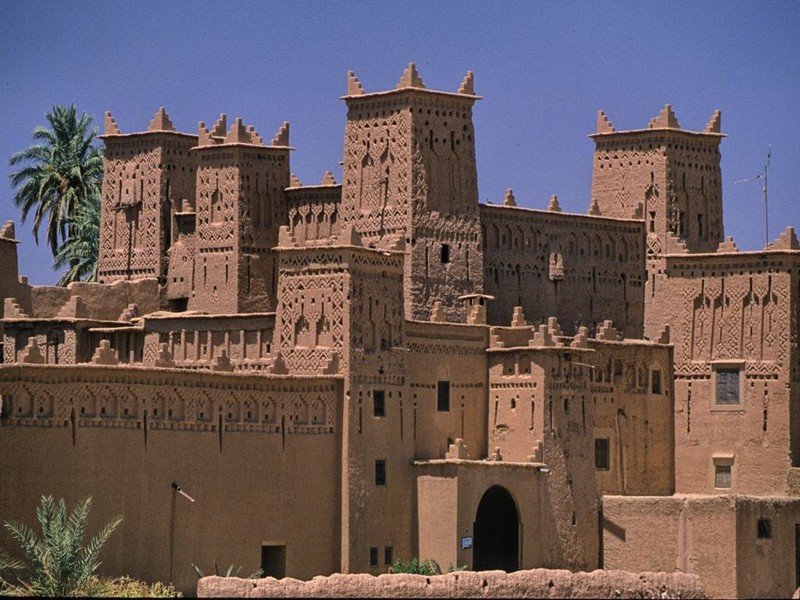
The architecture of a Moroccan kasbah is immediately recognizable. Key features include:
Thick earthen or stone walls — providing insulation against extreme heat while offering powerful defensive protection
Corner towers — giving kasbahs their imposing, fortress-like silhouette
Central courtyards — allowing natural light and fresh air to circulate through interior spaces
Narrow alleyways — offering strategic defensive advantages within the structure
Minimal windows on exterior walls — emphasizing security and privacy
Pointed arches and ornate doorways — reflecting the rich artistic traditions of Moroccan craftsmanship
Many kasbahs were built from mud brick and local stone, allowing them to blend seamlessly into their natural surroundings — whether set against the terracotta desert plains of the south or the dramatic rocky peaks of the Atlas Mountains.
A Fusion of Civilizations
What makes Moroccan kasbah architecture truly extraordinary is its rich layering of cultural influences. As you explore these structures, you encounter design elements drawn from Amazigh (Berber), Arab, and Andalusian traditions — seen in intricate mosaic tilework, carved plasterwork, arched windows, and ornate wooden ceilings.
Each architectural detail tells a story of cultural exchange, reflecting how kasbahs functioned not only as fortified strongholds but as living crossroads of civilization — places where diverse cultures met, traded, and left their permanent mark on the built landscape.
Kasbahs as Cultural Hubs
Markets and Economic Activity
Beyond their defensive function, kasbahs have always been vibrant centers of economic life. Many housed bustling markets where merchants gathered to trade traditional crafts, textiles, spices, and goods from across the caravan routes. These lively marketplaces transformed kasbahs into social and commercial hubs — places where communities came together, relationships were forged, and local economies flourished.
Cultural Traditions and Customs
The cultural significance of kasbahs extends far beyond their physical walls. Within these spaces, traditional ceremonies, music, dance, and storytelling have been celebrated and passed down through generations. Kasbahs are places where local folklore lives — where stories of tribal leadership, seasonal harvests, and ancient migrations are preserved in living memory rather than written records.
Visiting a kasbah today means stepping into this ongoing cultural conversation — an experience that connects you to the deepest roots of Moroccan identity.
Morocco’s Most Famous Kasbahs
🏰 Kasbah Ait Ben Haddou — UNESCO World Heritage Site
Without question the most iconic kasbah in Morocco, Ait Ben Haddou is a breathtaking fortified village of ancient mud-brick towers rising dramatically from the desert landscape near Ouarzazate. Declared a UNESCO World Heritage Site, this extraordinary ksar has also served as the filming location for some of the world’s most celebrated productions — including Gladiator, Lawrence of Arabia, Game of Thrones, and The Mummy.
Wandering through its ancient alleyways and climbing to the hilltop fortress for panoramic views of the surrounding desert is one of the most unforgettable experiences Morocco has to offer.
🕌 Kasbah of Marrakech
The Kasbah of Marrakech stands as a grand example of Moroccan royal architecture, located in the southern part of the Marrakech medina. Historically serving as a royal citadel, its vast sturdy walls once protected palaces, gardens, and mosques reflecting the city’s rich Islamic heritage. Today it remains one of Marrakech’s most significant cultural landmarks, drawing visitors into the heart of the city’s layered history.
🌊 Kasbah of the Udayas — Rabat
Perched above the mouth of the Bou Regreg river in Rabat, the Kasbah of the Udayas is celebrated for its stunning ocean views and its beautifully preserved blue and white painted streets — reminiscent of Chefchaouen and utterly photogenic. A UNESCO World Heritage Site alongside the historic city of Rabat, this coastal kasbah offers a fascinating window into Morocco’s Atlantic history and its long tradition of maritime defense.
🏔️ Kasbahs of the High Atlas Mountains
The High Atlas Mountains are home to numerous lesser-known but equally captivating kasbahs, built at elevated positions to control mountain trade routes and provide refuge during conflicts. Constructed from local mud brick and stone, these mountain kasbahs blend seamlessly into their dramatic natural surroundings — offering breathtaking views alongside their remarkable history. Many are accessible on guided tours through the Atlas Mountains from Marrakech.
🐪 Kasbahs of the Desert South — Road of a Thousand Kasbahs
Southern Morocco’s legendary Road of a Thousand Kasbahs — stretching between Ouarzazate and Merzouga — is lined with ancient fortified villages, crumbling towers, and beautifully preserved kasbahs set against the backdrop of dramatic desert gorges and palm-filled valleys. The Dadès Valley, Draa Valley, and Todra Gorge region contain some of Morocco’s most spectacular and atmospheric kasbah landscapes, best explored on a guided desert tour from Marrakech or Fez.
Kasbahs in Literature and Film
Kasbahs have long captured the imagination of writers, filmmakers, and storytellers. In literature, these fortified structures symbolize mystery, adventure, and historical depth — used as evocative backdrops for stories of intrigue and cultural discovery. In film, the kasbah appears as a place of refuge, danger, and labyrinthine complexity.
The famous phrase “Come with me to the Casbah” — originating from early Hollywood cinema — became one of pop culture’s most enduring references, perfectly capturing the sense of mystery and allure that kasbahs have always projected onto the world’s imagination.
Today, Morocco’s kasbahs continue to attract major international film productions, with Ait Ben Haddou and Ouarzazate serving as Africa’s most important film location destinations.
Kasbahs Today — Preservation and Modern Life
Preservation Efforts
Many of Morocco’s kasbahs face significant challenges from natural erosion, seismic activity, and the passage of time. Preservation initiatives — funded by local governments, international heritage organizations, and UNESCO — focus on restoring these structures using traditional materials and construction techniques, ensuring their authenticity is maintained for future generations.
Kasbahs in Modern Morocco
In modern Morocco, kasbahs serve as key attractions in the country’s thriving tourism industry. Some have been sensitively transformed into boutique hotels, museums, and cultural centers — balancing heritage preservation with contemporary use and providing vital economic benefits to surrounding communities. Staying in a kasbah-style riad or boutique hotel remains one of the most authentic and memorable accommodation experiences Morocco has to offer.
Kasbah vs Medina — What Is the Difference?
Many travelers confuse kasbahs with medinas. Here is a simple breakdown:
KasbahMedinaPrimary PurposeMilitary, administrative, and governance centerCommercial and residential heart of a cityCharacterFortified, strategic, imposingBustling, commercial, densely populatedArchitectureThick defensive walls, towers, limited windowsNarrow winding streets, souks, mosques, riadsLocationElevated or strategically positionedCentral urban areaAtmosphereHistorical, monumentalLively, commercial, everyday
In traditional Moroccan cities, the kasbah and medina often exist side by side — the kasbah providing the seat of power and protection, while the medina pulses with the commercial and social energy of daily life.